


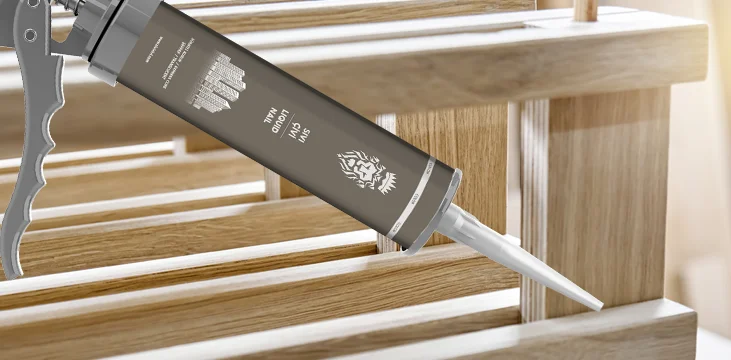
On which surfaces can liquid nails be used?
Liquid nails are a frequently preferred assembly adhesive in construction and decoration projects due to their fast and strong bonding properties. So, on which surfaces can this product be used effectively? In this article, we will examine in detail the application areas of liquid nails, points to consider according to surface types, and practical usage suggestions.
Main Applications of Liquid Nails
Liquid nail, as a versatile adhesive, provides secure and permanent adhesion to many surfaces. It can be applied to different surfaces such as wood, metal, ceramic, concrete, and plastic. It saves time and labor, especially in assembly, repair, and decoration projects.
For use on wooden surfaces.
- Assembly and filling: Can be used at the joints of wooden parts. It has a short holding time and high durability.
- Furniture and decoration: Offers a strong and clean solution for mounting shelves, panels, or frames.
- Tip: Lightly sanding the surface and allowing it to dry will improve adhesion.
For Use on Metal Surfaces
- Quick assembly: Suitable for joining lightweight metal parts or fastening metal decorative elements.
- Durability: Holding time is short, but maintaining stability is important to increase load-bearing capacity.
- Tip: Removing oil and dust from the surface will improve adhesive performance.
For use on ceramic and tile surfaces.
- Bathroom and kitchen: An ideal solution for mounting accessories on tile or ceramic surfaces.
- Quick application: Short holding time, load-bearing capacity once drying is complete.
- Recommendation: Using specialized formulas in humid environments increases durability.
For use on concrete and brick surfaces.
- Wall and floor mounting: Securely attaches decorative elements or small structural parts to concrete or brick surfaces.
- Porous surfaces: A clean and slightly damp surface is preferred to ensure adhesive absorption.
- Recommendation: Avoiding thick applications and keeping parts stable increases success.
For use on plastic and PVC surfaces.
- Easy assembly: Effective for securing lightweight plastic parts.
- Surface preparation: Adhesion speed may be slower on plastic surfaces; lightly sand the surface if necessary.
- Tip: Applying pressure while placing the parts shortens the holding time.
For use on glass surfaces.
- Aesthetic applications: Provides strong adhesion on clean and dry surfaces when mounting glass decorative elements.
- Warning: Grip time may be longer on very slippery surfaces; using a stable support is important.
General Application Tips
- Ensure the surface is clean, dry, and dust-free.
- Apply light sandpaper to smooth surfaces to create a rough texture.
- After placing the parts, hold them in place for a short time.
- Avoid thick applications; if necessary, apply in several thin lines.
- Choose special formulas to increase durability in humid environments.
Conclusion
Liquid nail is a practical solution for providing secure and permanent adhesion on various surfaces. It can be used on many surfaces such as wood, metal, ceramic, concrete, plastic, and glass. Surface preparation, correct application, and patient waiting are critical for long-lasting adhesion. By following this guide, you can use liquid nail correctly in any project.
The information in this text may vary from time to time depending on the manufacturer. Always check the product label.


