


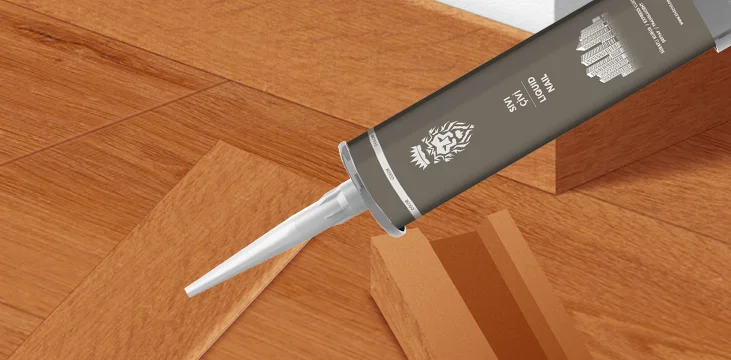
What can be glued with liquid nails? Areas of Use
Liquid nail adhesive is a commonly used adhesive in homes and workplaces thanks to its fast drying and strong adhesion properties. But which materials and surfaces can we safely bond together? This article details the most common uses of liquid nail, the types of surfaces it can bond, and practical application tips.
Using Liquid Nails on Wooden Surfaces
- Furniture assembly: Quickly and securely connects shelf, cabinet, coffee table, or panel components.
- Decorative elements: Preferred for mounting wooden frames, panels, or decorative pieces.
- Suggestion: Clean the surface and lightly sand it; hold the parts in place and wait briefly.
Use on Metal Surfaces
- Lightweight metal assemblies: Decorative metal parts, profiles, and fasteners can be securely bonded.
- Durability: Holding time is short; surface preparation is important for long-term durability.
- Suggestion: Remove dust and oil from the metal surface, and lightly sand if necessary.
Use on Ceramic and Tile Surfaces
- Bathroom and kitchen installation: Securely attaches accessories such as coat racks, soap dishes, and holders.
- Quick application: Short holding time, load-bearing capacity after drying.
- Recommendation: Use formulas specifically designed for humid environments and keep the parts securely in place.
Use on Glass Surfaces
- Glass decoration: Can be used to fix glass display cases, frames, and small glass pieces.
- Warning: It is important to hold on steady ground on slippery surfaces.
- Tip: Apply to a clean, dry glass surface and do not apply excessive pressure.
Use on Plastic and PVC Surfaces
- Lightweight parts: Suitable for gluing plastic panels, frames, and decorative pieces.
- Surface preparation: Adhesion speed may be low on plastic surfaces; light roughening with sandpaper is recommended.
- Tip: Holding the parts firmly in place will improve adhesion.
Use on Concrete and Brick Surfaces
- Wall and floor applications: Secures decorative and small structural parts to concrete or brick surfaces.
- Porous surfaces: The surface must be clean and slightly damp to allow the adhesive to be absorbed.
- Recommendation: Keep the parts stable and avoid applying thick layers.
Other Applications
- Installation and repair: Door frames, window sills, panels, and decorative parts can be safely glued.
- Practical solutions: Saves time and ensures clean application in home, office and workshop projects.
- Various surface combinations: Offers dual-surface bonding solutions for different materials such as wood-metal and ceramic-plastic.
Application Tips
- Keep surfaces clean, dry, and dust-free.
- Apply light sandpaper to smooth surfaces.
- After placing the parts, hold them steady and provide support for a short time.
- Avoid thick applications; if necessary, apply in several thin lines.
- Use special formulas that will increase durability in humid or hot environments.
Conclusion
Liquid nails are an effective solution for securely joining different materials and speeding up assembly processes. They can be used on many surfaces such as wood, metal, ceramic, glass, plastic, and concrete. With proper surface preparation, correct application, and patient waiting, successful adhesion can be achieved in any project.
The information in this text may vary from time to time depending on the manufacturer. Always check the product label.


